Runway aims to revolutionize video gaming with its generative AI platform: between promise and challenge
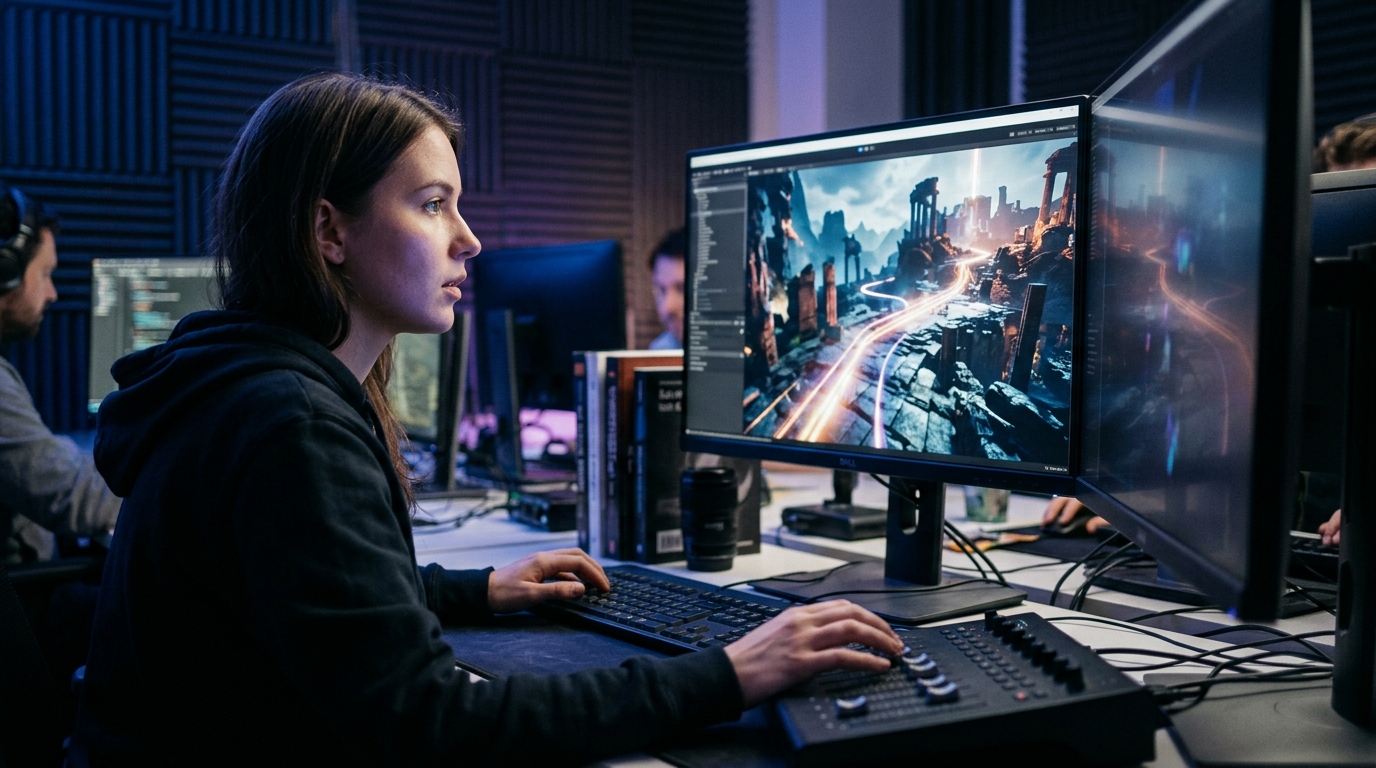
The start-up Runway, already known for its AI-assisted video generation tools, has announced the launch of a platform dedicated to video game developers. The goal? To enable the real-time creation of environments, characters, and animations using generative AI.
The start-up Runway, already known for its AI-assisted video generation tools, has announced the launch of a platform dedicated to video game developers. The goal? To enable the real-time creation of environments, characters, and animations using generative AI. According to BeGeek, Runway aims to radically transform video game production by making development faster, more economical, and more accessible. However, this innovation also raises questions about the quality, intellectual property, and originality of the generated creations.
A platform to democratize video game creation
Making video game production faster and less costly
With its new platform, Runway provides developers with a set of APIs and tools capable of generating environments, objects, or characters based on simple text descriptions. The idea is to drastically reduce the time required to create 3D assets, textures, or animations, which currently represent one of the most significant expenses and workloads in game production.
According to Runway, an independent studio could thus generate playable prototypes in a few days, instead of several weeks or months. Design teams would save valuable time, while studios could focus on storytelling and gameplay rather than tedious manual modeling.
Increased accessibility for small studios and independent creators
Runway's other ambition is to democratize video game development by allowing small studios, or even solo creators, to access professional-quality graphic resources without having to hire a team of artists. The platform intends to offer usage-based pricing models so that the technology is accessible even to projects with limited budgets. This approach could significantly expand the number of players able to enter game development and stimulate creativity in a sector where production costs have continued to rise in recent years.
Between risks of standardization and legal challenges
A danger to the originality and diversity of games
While Runway's promise is enticing, it also raises concerns. Some creators fear a homogenization of productions: if many games use the same AI models, aesthetic variety could suffer, with environments or characters too similar from one title to another. In video games, visual identity and graphic universe are often essential differentiating elements.
This issue is even more sensitive because AI models are trained on existing image corpora. If these corpora are not diverse or favor certain styles, the platform could inadvertently impose a dominant aesthetic, to the detriment of individual creativity.
Intellectual property, a minefield
Another point of concern: the legality of generated content. Runway claims its platform respects copyright, but training AI models on existing images raises the question of licenses: who owns the generated environment or character? The prompt creator, the Runway platform, or the holders of the works used as examples? These gray areas could lead to disputes between developers, artists, and publishers.
Industry experts call for clear contractual frameworks defining the ownership of AI creations and commercial exploitation rights. Without these safeguards, the widespread dissemination of generated assets could expose studios to lawsuits or even jeopardize the release of certain games.
With its new platform, Runway aims to disrupt video game production by enabling rapid and economical generation of graphic assets by AI. A technological advancement that could unleash the creativity of independent studios but also requires addressing the challenges of aesthetic standardization and copyright protection.
To avoid pitfalls and secure their production, studios and creators using Runway's platform will need to:
- ensure that generated content does not infringe existing rights;
- contract with Runway on intellectual property terms;
- implement an internal artistic validation process to guarantee the originality of creations.
These steps will help avoid disputes while ensuring the quality and authenticity of productions.
Runway's innovation raises the broader question of AI use in artistic creation: can technology truly unleash human creativity, or does it risk homogenizing cultural production? The answer will depend on developers' choices and the ability of industry players to establish clear, ethical, and creator-respecting rules.