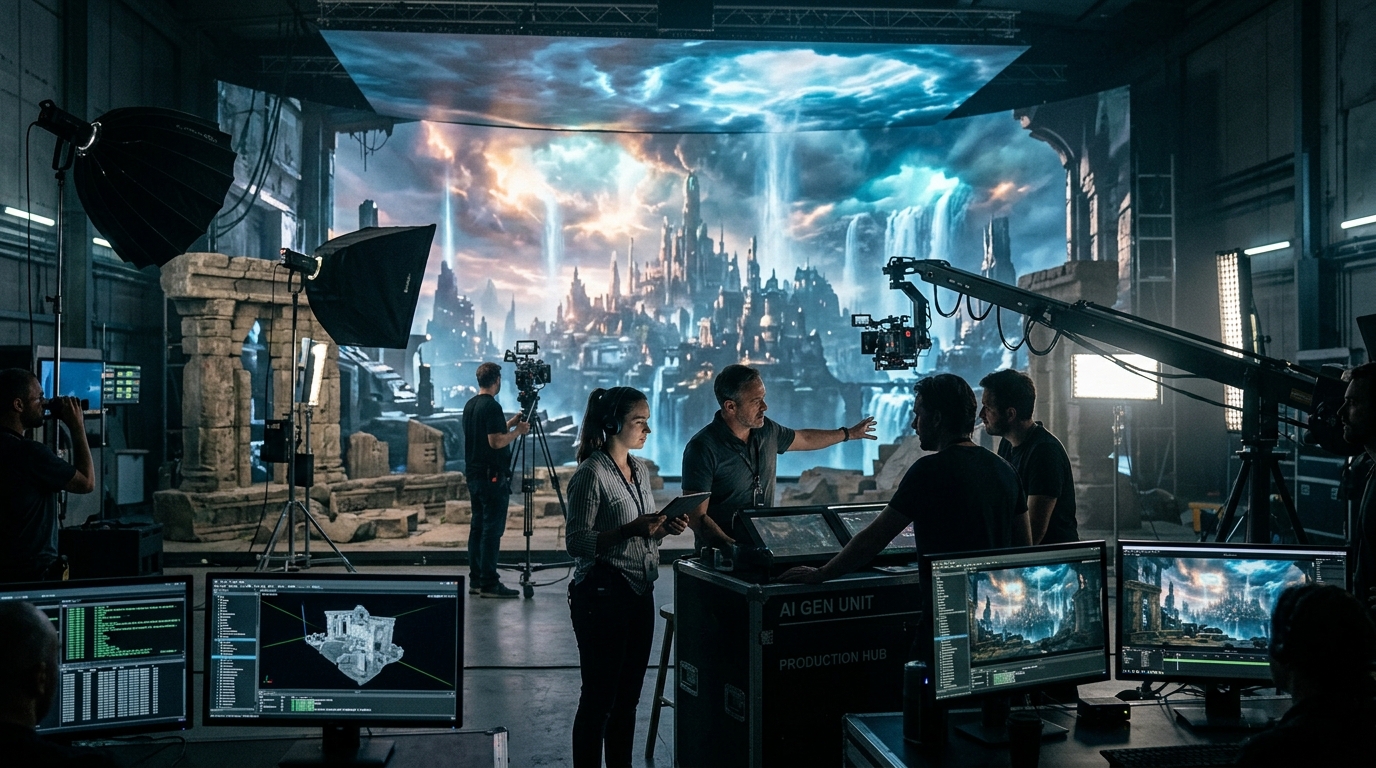
When Netflix Uses AI to Create a Spectacular Scene: Towards a Revolution in Audiovisual Production?
Netflix has taken a new step in integrating artificial intelligence into the entertainment industry. In the series "What Jennifer Did", a shot from the opening scene has
Netflix has taken a new step in integrating artificial intelligence into the entertainment industry. In the series “What Jennifer Did”, a shot from the opening scene was designed by a generative AI model, demonstrating how these technologies can now play a leading creative role. While this technical feat is impressive, it also raises fundamental questions about the transformation of the artist's profession, the narrative reliability of AI-created content, and of course, the issue of intellectual property.
According to the site Phonandroid, the scene in question, an aerial view plunged into darkness over a Canadian residential suburb, seems innocuous. Yet, it is not real. It was entirely generated from a text prompt, then animated to fit the dramatic rhythm of the documentary. This scene was not filmed by a camera or designed by a graphic artist, but by an automated visual generation system. The viewer, however, is none the wiser. For Netflix, this type of AI usage allows for cost reduction, time savings, and expanding creative possibilities. For image technicians and film professionals, however, the initiative illustrates a major upheaval, even a direct threat.
This use of AI in creating widely distributed content is not an isolated case. Other platforms are already experimenting with similar tools, like Runway, Pika Labs, or Sora from OpenAI. The audiovisual industry, already facing audience fragmentation and increasing pressure on production budgets, sees AI as a lever to industrialize certain technical or creative tasks. The automatic generation of sets, transitions, sound effects, or dubbing is becoming increasingly common, especially in low-budget productions or documentaries.
But these developments pose several problems. First, the question of truthfulness: in a genre like documentary, inserting generated images can blur the line between fiction and reality. If a scene is entirely fabricated but presented as authentic, is the viewer deceived? Where is the line between aesthetic reconstruction and narrative manipulation? Then, intellectual property. If an AI produces an image or sequence from thousands of examples found on the Internet, is there borrowing? Plagiarism? Original work? This legal ambiguity fuels growing concern among creators and rights holders. According to a study published in Variety in May 2025, more than 64% of audiovisual professionals believe that AI directly threatens their jobs, particularly in post-production sectors.
Finally, a third point raises questions: contractualization. In a context where AIs are used to replace artists, how can we ensure a controlled and fair use? To avoid a drift towards wild automation, producers and broadcasters will need to integrate new contractual clauses. This includes: the obligation to mention AI-generated elements in the credits; the commitment to respect the rights of works used in the training base; or the implementation of mandatory human supervision during critical artistic choices.
Netflix, for its part, has not specifically communicated on the tool used to generate this scene. But according to several industry experts, it would be a proprietary solution combining visual generation models and video processing tools. This integrated approach could become a standard for major streaming platforms, which seek to control the entire production value chain, from script to broadcast.
This profound transformation calls for a collective awareness. AI can certainly amplify creativity and democratize access to certain costly techniques, but it also redefines the notion of author, set, and even collective memory. In the near future, will we see series entirely designed by AIs, without it being visible to the naked eye? The revolution is underway, and the balance between technological innovation, respect for the image professions, and ethical framework remains to be built.
To accompany this mutation, industry players will need to contract differently for their services: plan compliance audits on generated elements, formalize the limits of AI use in production contracts, and ensure the traceability of each creation, from the database used to the final rendering. The debate on the ownership of AI-created images is just beginning.
Netflix is opening a new chapter here, at the crossroads of innovation and regulation. The seventh art is gaining an eighth arm: artificial intelligence. It remains to be seen whether this arm will be a valuable aid or an invisible hand with uncontrolled effects.