Moonshot AI Touts an Ethical Framework, but Its Past Tarnishes Credibility
The Chinese lab Moonshot AI presents a new ethical framework praised by some industry players. But amid accusations of distillation and geopolitical pressures, the contrast raises questions.
An Ethical Framework at Just the Right Time
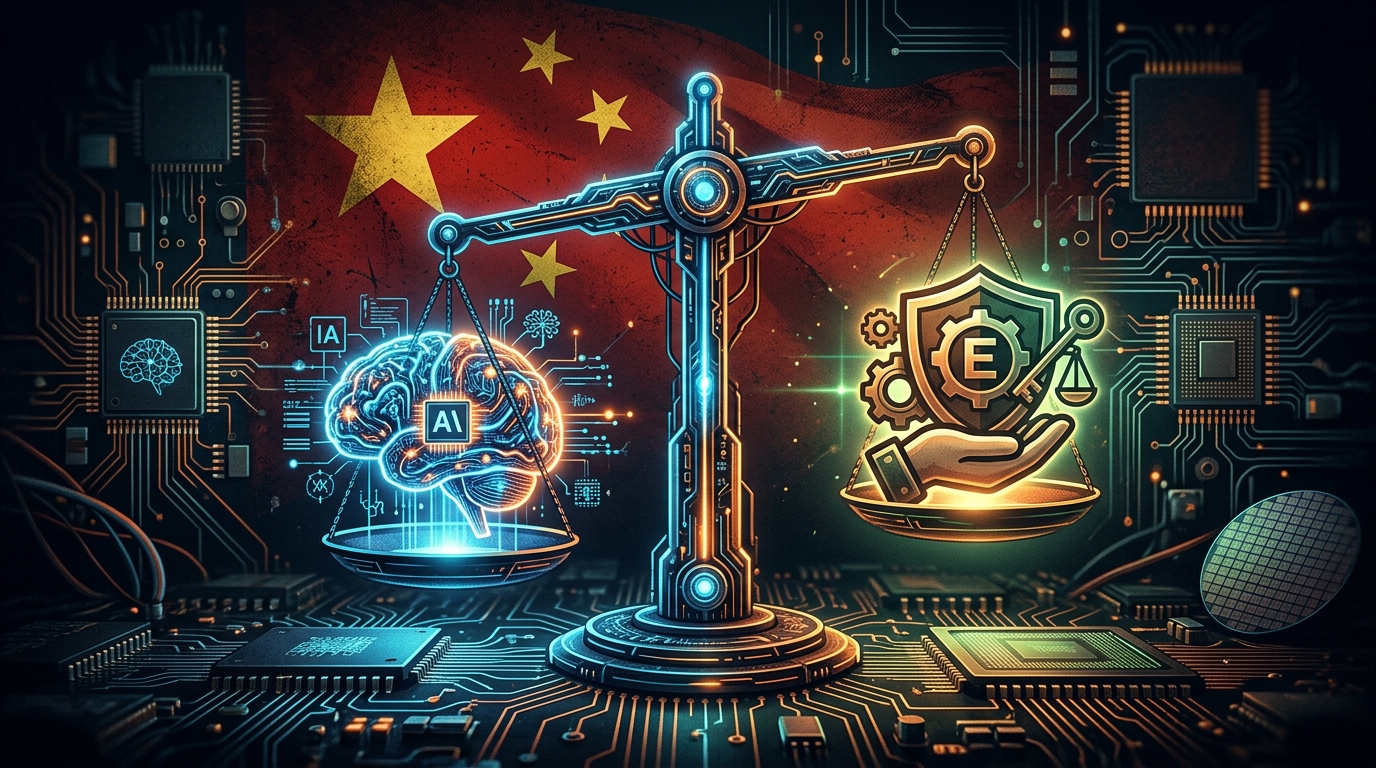
Moonshot AI claims to have developed an ethical framework intended to become a benchmark for responsible innovation in AI. The announcement, covered by several specialized media outlets, comes at a particularly tense time for the Chinese startup, whose reputation has been seriously tarnished in recent months [39]. It's hard not to see this as a carefully calibrated PR move.
The Context: A Reputation Under Pressure
Before discussing ethics, it's important to remember where Moonshot AI comes from. The launch of Kimi K3 sparked a real controversy when allegations of unauthorized distillation from an Anthropic model emerged, to the point that the White House's Office of Science and Technology Policy publicly commented on the matter [1]. U.S. authorities have opened an investigation into these allegations, although they remain unproven to date [2]. Independent researchers have also disputed these distillation accusations, while noting that Chinese cybersecurity and data security laws apply to Moonshot regardless of the location of its servers [3].
This climate of suspicion has had tangible financial repercussions: the release of Kimi K3 fueled a debate on the “total communism of AI” and shook Wall Street, with the Nasdaq retreating amid fears of Chinese open-source competition [4].
A Technical Model That Isn't Debated
On a purely technical level, no one disputes Moonshot AI's ambitions. The Kimi K2 series had already been well-received in the open-source AI market, and Kimi K3 explicitly aimed to bridge the gap with closed models from OpenAI and Anthropic [5]. Reuters reported that this new open-source model sought to outpace the competition by claiming superior performance to traditional open-source rivals, while matching some American capabilities in coding [7]. However, the Washington Post tempers this flattering picture, noting that Kimi K3 remains ineffective for complex reasoning tasks [8].
Moreover, Moonshot has structured its business model around a custom license for Kimi K3, specifically targeting providers who resell the model as a service and imposing distinct agreements for high-revenue commercial users [6].
Ethics, a Terrain Already Mapped by the Industry
In essence, Moonshot AI is not entirely isolated in its approach. Benchmarks intended to evaluate deception, persuasion, and long-term planning of AI systems have been adopted by major industry labs, including OpenAI, Google, Anthropic, Alibaba — and Moonshot AI itself, according to research from Stanford CRFM cited in a public policy analysis [9]. This suggests that the Chinese lab is already, in some way, participating in collective governance efforts, regardless of its own in-house ethical framework.
On GitHub, the company also claims a commitment to solving ambitious problems leading humanity toward AGI, betting on open-source with projects like Kimi K3 or Attention Residuals [12].
Geopolitical Tensions Are Never Far Away
However, it's impossible to dissociate this ethical framework from the geopolitical context. Moonshot AI is currently seeking more Nvidia Blackwell chips to train its future Kimi K4, a move that openly defies U.S. export restrictions, even as the company already faces accusations over the training of its previous model [10]. A French dossier on the lab notes that Kimi K3 remains, to date, the largest Chinese model ever published, illustrating Moonshot's rapid rise against both Chinese and American competition [11].
In this context, the publication of an ethical framework can hardly be read as a purely selfless gesture. It is rather part of a legitimization strategy, intended to reassure commercial partners, regulators, and investors, at a time when the startup precisely needs capital: it recently closed a $3.5 billion funding round, while having to contend with risks related to Chinese data laws for its open-weight models [3].
What This Framework Really Says — and What It Doesn't
A central question remains: does this ethical framework come with verifiable control mechanisms, or is it just a statement of intent? Precedents in the industry urge caution. Lessons learned from the collaboration between Moonshot AI and Cursor on AI governance issues show that theory and practice can diverge significantly once systems are deployed at scale. Simply publishing a framework document does not guarantee transparency on training data, independence of safety evaluations, or answers to questions raised by U.S. regulators.
For now, the industry seems to welcome the initiative — at least on the surface. But the recognition displayed by some “industry leaders” deserves to be put into perspective with the extent of the controversies that continue to surround Moonshot AI, between unresolved distillation accusations, tensions over access to Nvidia chips, and persistent skepticism about the real robustness of its safeguards. The ethics displayed and the ethics practiced do not always coincide, and only the coming months — with the announced release of Kimi K4 — will allow us to judge whether this framework translates into concrete actions or remains a well-rehearsed communication exercise.