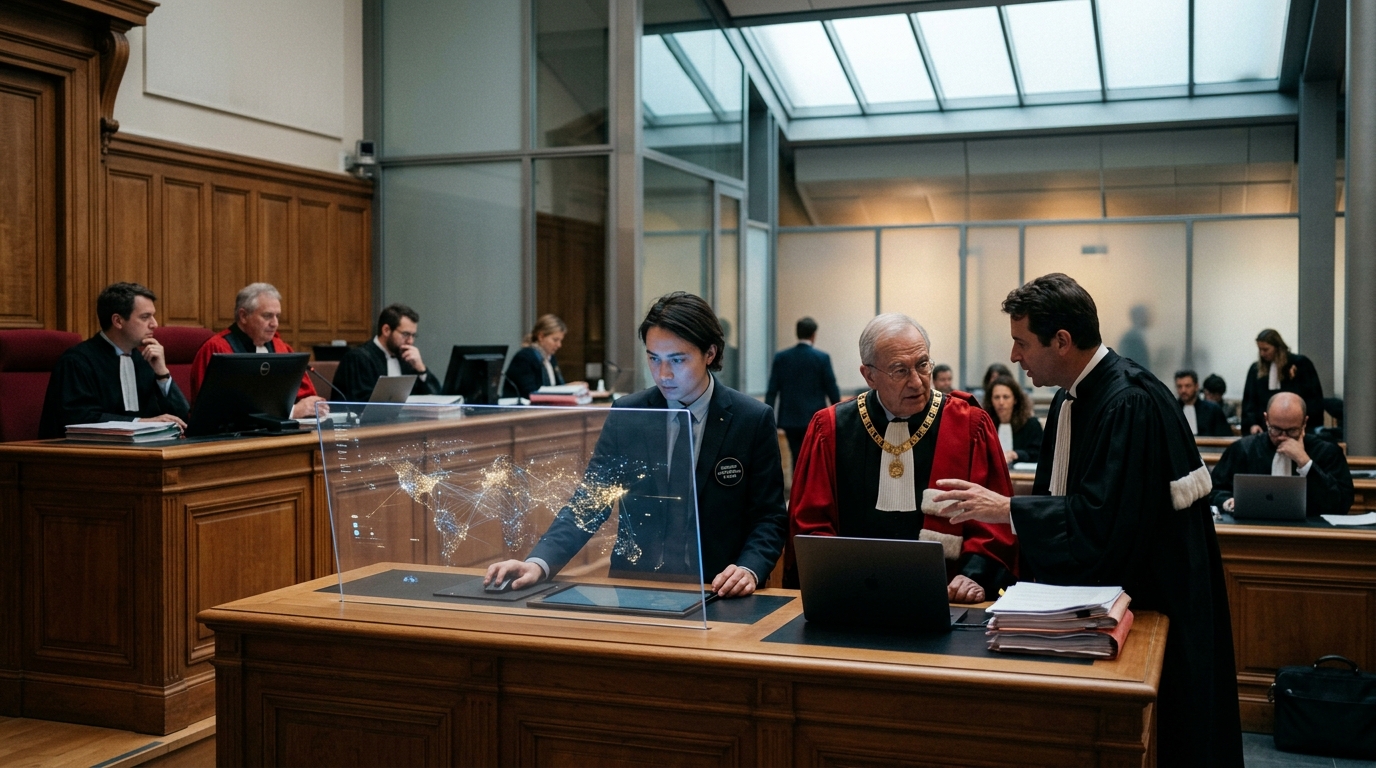
The Paris Commercial Court Adopts Artificial Intelligence to Optimize Its Procedures
The Paris Commercial Court has begun testing artificial intelligence (AI) tools to handle the increase in procedures without increasing the number of consular judges. Under the lead
The Paris Commercial Court has begun testing artificial intelligence (AI) tools to handle the increase in procedures without increasing the number of consular judges. Under the leadership of Patrick Sayer, president of the court since 2024, an innovative strategy has been implemented to modernize judicial operations.
A reference magistrate has been appointed to oversee AI-related initiatives. Among the first steps, a model based on ChatGPT-4 is used to analyze anonymized datasets and draft pre-reports. These documents include all necessary elements to facilitate the magistrates' work.
In 2025, a new phase will be launched with the Chamber for Improving Dispute Processing. This stage will introduce tools to assist in drafting judicial decisions. These tools will include safeguards to prevent errors, such as the ability to flag when information is missing or uncertain. Initial tests show a significant increase in productivity, with tasks being completed up to six times faster. Magistrates will also be able to supervise the results and exclude certain elements, such as outdated case law.
This project focuses on actions like payment orders, of which 20,000 are processed each year. These improvements will help ease the workload of clerks and better manage the growing flow of cases.